In lift safety, some of the most important components are also the least visible.
Passengers cannot see them. Building users never interact with them. During normal operation, these components remain hidden from passengers. Yet in the event of a fault, their performance becomes critical.
One such component is the overspeed governor — a safety device designed to detect excessive lift speed and trigger emergency braking. It operates only when abnormal conditions arise, which makes its reliability essential and its condition non-negotiable
When Wear Is More Than Cosmetic
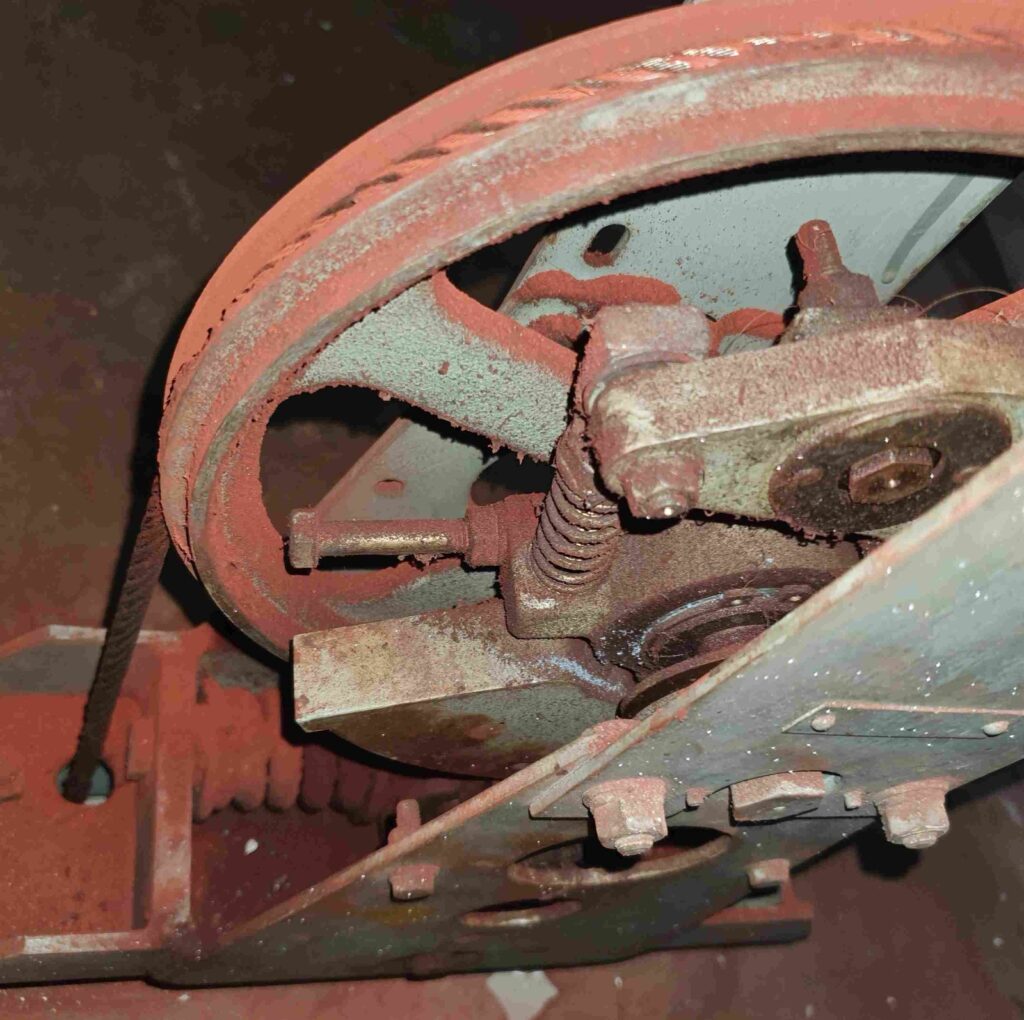
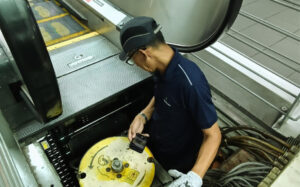
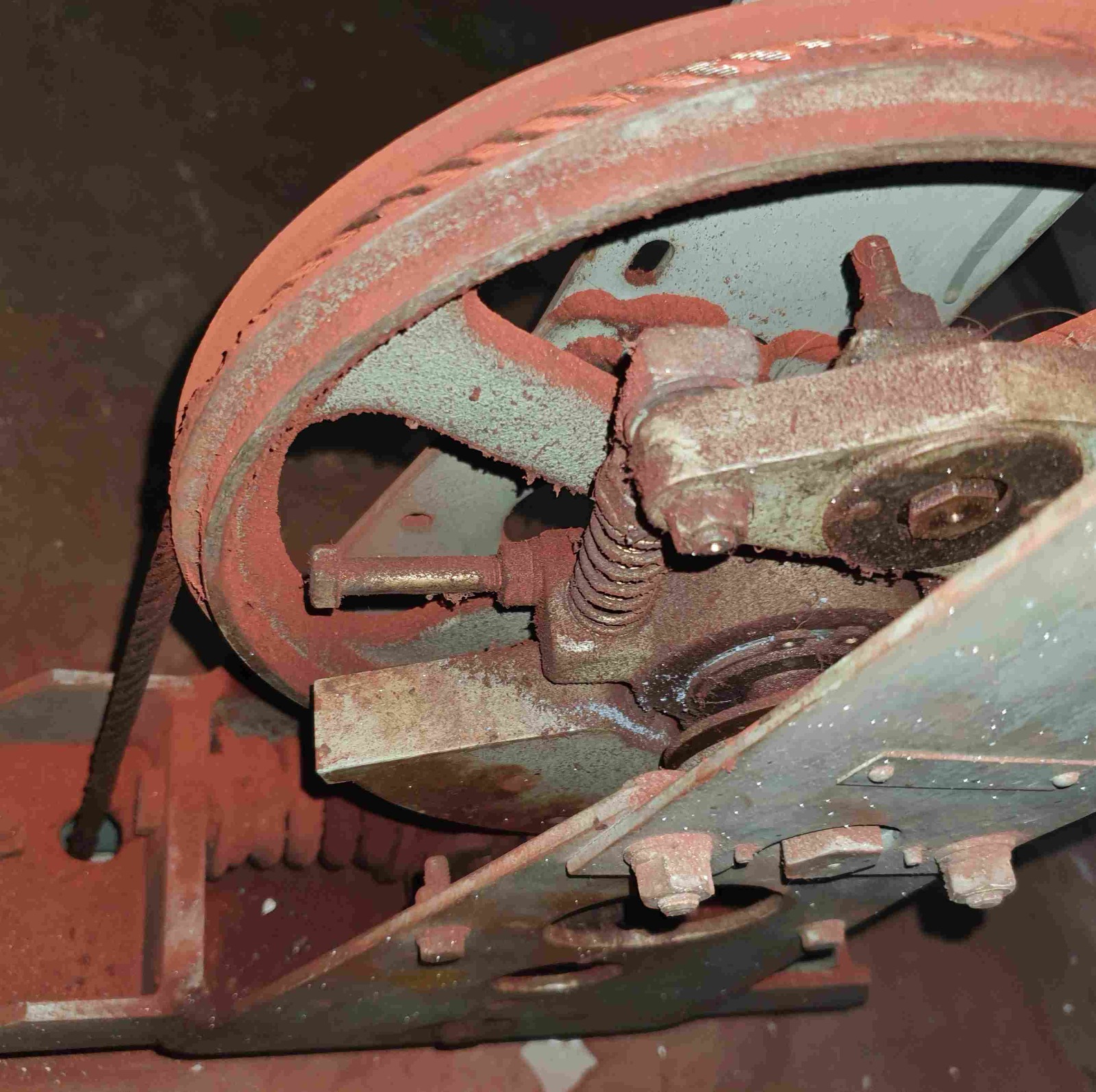
The image shown above highlights an overspeed governor assembly with visible red rust dust and corrosion on the governor sheave and mechanical components.
At a glance, this may appear to be routine ageing or surface deterioration. In mechanical spaces, corrosion is often dismissed as inevitable, particularly in older installations. However, when corrosion affects a safety-critical device, it warrants closer attention.
The overspeed governor relies on precise mechanical movement to function correctly. Any restriction, resistance, or degradation within the mechanism can affect how it responds when excessive lift speed is detected.
In emergency scenarios, the margin for error is extremely small.
Why the Overspeed Governor Matters
Unlike components involved in daily lift operation, the overspeed governor exists to protect passengers during abnormal or emergency conditions.
When activated, the governor engages the safety gear, causing the lift car to decelerate and stop in a controlled manner. This process depends on:
- accurate speed detection
- unrestricted mechanical movement
- predictable engagement of the overspeed stopping mechanisms
If any part of this chain is compromised, the effectiveness of the safety system may be reduced.
Corrosion, debris build-up, or surface deterioration can interfere with movement and sensitivity — particularly in components that are rarely activated during normal service.
Understanding the Risks of Corrosion
In safety devices, corrosion is not merely a maintenance issue; it is a risk indicator.
Red rust dust and surface corrosion may lead to:
- increased friction within moving parts
- uneven wear on mechanical surfaces
- accumulation of debris that interferes with operation
Over time, these factors can affect the governor’s responsiveness. While the lift may continue operating normally, the safety device may no longer perform as designed under emergency conditions.
This is what makes such deterioration especially concerning — the absence of obvious symptoms does not equate to the absence of risk.
Probable Causes of Deterioration
Based on inspection experience, deterioration of this nature is commonly linked to several contributing factors:
- Prolonged exposure to moisture or high humidity
Lift shafts and machine rooms are often susceptible to damp conditions, especially in basements, older buildings, or areas with poor airflow. - Ageing components with limited corrosion protection
As systems age, protective coatings may degrade, leaving metal surfaces exposed. - Insufficient cleaning and preventive maintenance
While functional checks may be performed, deeper cleaning of safety components is sometimes overlooked. - Environmental issues left unresolved
Water ingress, leaks, or condensation can accelerate corrosion if not addressed promptly.
These conditions typically develop gradually, which is why deterioration can remain unnoticed for extended periods.
Servicing and Inspection Serve Different Roles
A key point that building owners and MCSTs should understand is that servicing and inspection are not interchangeable.
- Servicing focuses on operational performance — ensuring the lift runs smoothly and faults are rectified when they arise.
- Inspection and audit focus on safety, compliance, and early identification of risks that may not yet affect daily operation.
An overspeed governor affected by corrosion may not trigger operational complaints. Without independent inspection, such issues can persist undetected.
This distinction is critical when managing safety-critical systems.
What Building Owners and MCSTs Should Take Note Of
Responsible lift management requires more than ensuring the lift is functional.
Building stakeholders should:
- ensure regular, independent statutory inspections are conducted
- address environmental issues such as moisture ingress and poor ventilation
- treat corrosion and debris as early warning signs, not minor defects
- recognise that preventive action reduces both safety risks and long-term costs
Overspeed governors are designed to trigger only until an abnormal condition occurs. That is precisely why their condition must be assured at all times.
Beyond Minimum Compliance
Compliance with regulations is essential, but it should not be the sole measure of safety.
Effective lift safety management is based on:
- early detection of deterioration
- timely corrective action
- informed decision-making by accountable parties
Corrosion does not develop overnight. Neither do most safety incidents.
They evolve quietly, often out of sight, until a critical moment exposes the weakness.
The Need for Proactive Lift Audits
Independent lift audits play a vital role in identifying risks that may not surface during routine servicing.
A professional lift audit provides:
- objective assessment of safety-critical components
- early identification of deterioration and non-compliance
- clearer insight for maintenance planning and rectification
For building owners, MCSTs, and facilities managers, this proactive approach supports both safety and accountability.
At Emaan Inspection, we conduct independent Lift Audits and statutory inspections to help building stakeholders identify risks early — including issues affecting critical safety devices such as overspeed governors.
Lift safety is not just about keeping systems running.
It is about ensuring they will perform when they are needed most.
👉 Engage Emaan Inspection for a professional Lift Audit, because prevention is always more effective than response.